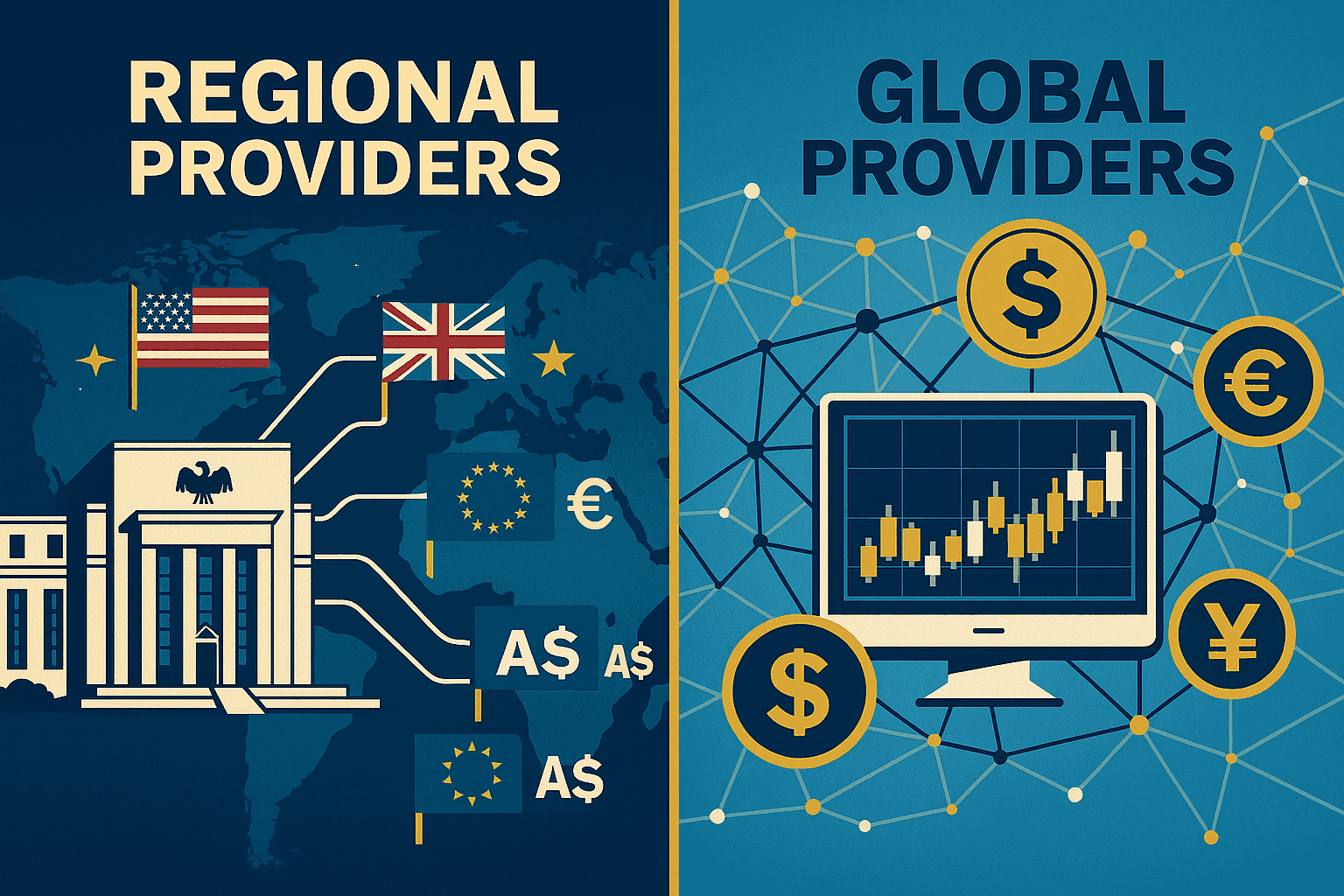
Choosing the right forex signal provider is critical for traders seeking consistent profits. One important decision is whether to use a regional provider, which may focus on local markets, or a global provider that serves clients worldwide. Each option offers distinct advantages and potential challenges, and understanding these differences is essential for selecting the service that aligns best with your trading style, goals, and risk tolerance.
Understanding Regional vs Global Providers
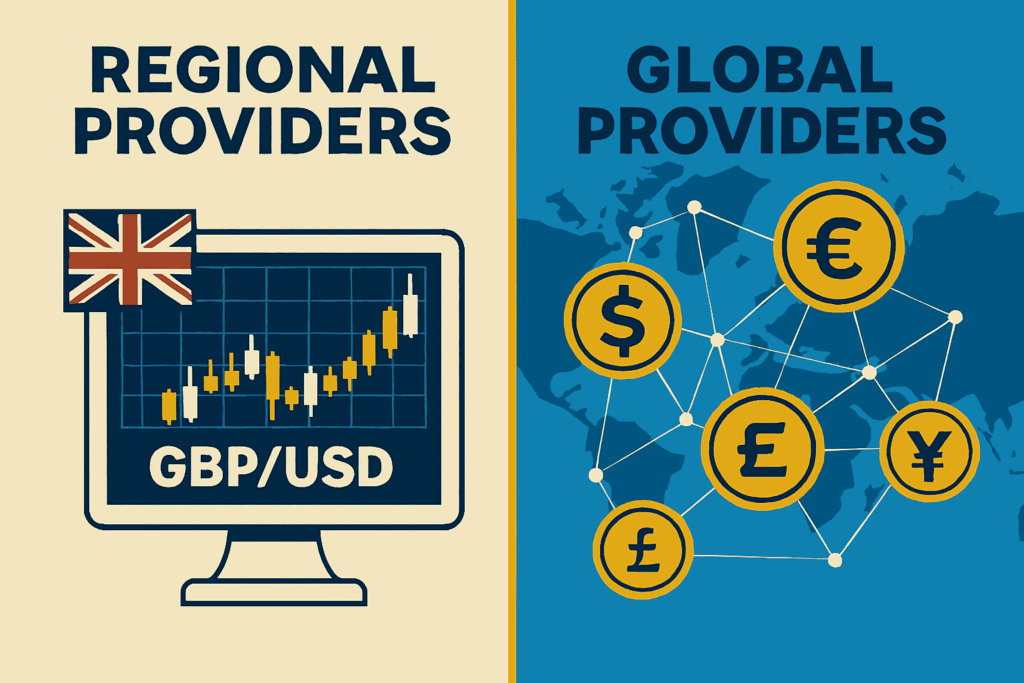
Regional Providers typically operate within a specific country or geographic area, often tailoring signals to local economic events, central bank policies, and currency pairs relevant to that region.
Global Providers, on the other hand, offer signals for multiple currency pairs across different markets and regions. These providers often use advanced technology, algorithms, and international market analysis to generate trading signals for a worldwide audience.
Advantages of Regional Providers

- Local Market Expertise – Regional providers often have deep knowledge of local economic conditions, central bank decisions, and geopolitical factors that influence currency movements.
- Focused Currency Pairs – They may specialize in certain currency pairs, such as GBP/USD for the UK or USD/INR for India, providing highly tailored insights.
- Personalized Support – Regional providers may offer more direct and responsive customer service, understanding local market needs and trader queries better.
- Faster Response to Local Events – Regional news and economic updates may be interpreted and acted upon more quickly by providers focused on a specific market.
Advantages of Global Providers

- Diverse Currency Coverage – Global providers offer signals across multiple currency pairs and markets, allowing traders to diversify their portfolios.
- Advanced Technology and Tools – Many global providers leverage AI, machine learning, and sophisticated algorithms to generate signals with high analytical rigor.
- Broader Market Analysis – Global providers often consider macroeconomic trends, international events, and cross-market correlations to create signals.
- Consistency Across Markets – They tend to maintain standardized quality and methodologies, ensuring reliability for traders operating in multiple regions.
Challenges of Each Approach
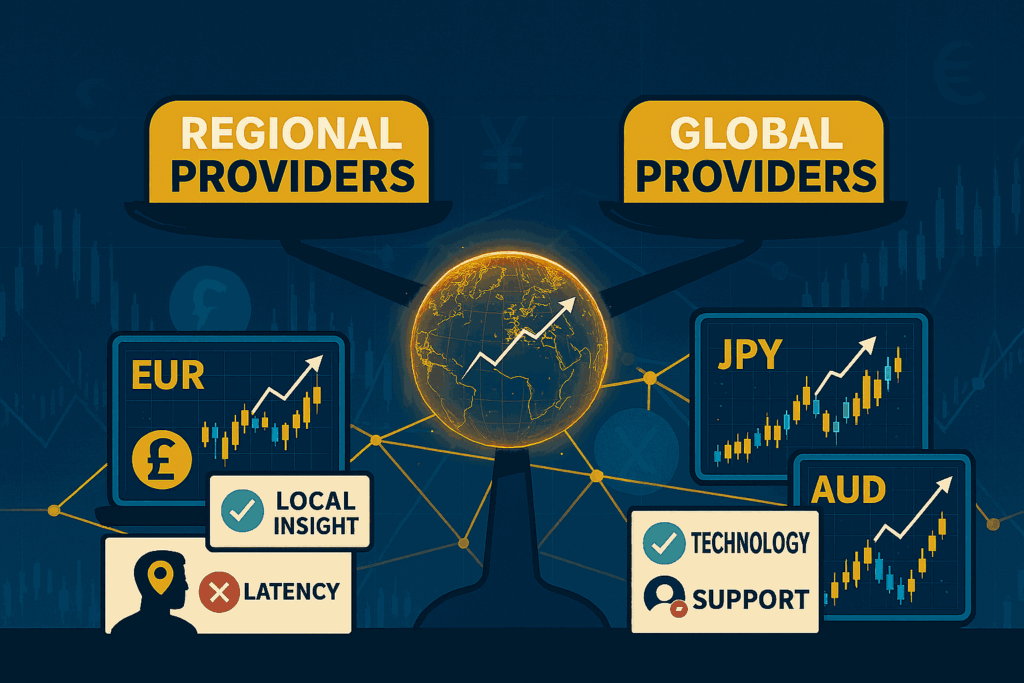
Regional Providers may lack the technological infrastructure of global providers, and their signals may be overly focused on a narrow set of currency pairs. Traders looking to diversify internationally may find these limitations restrictive.
Global Providers, while technologically advanced, may not fully capture local market nuances. Signals may occasionally miss region-specific developments or respond slower to local central bank announcements.
How to Decide Between Regional and Global Providers
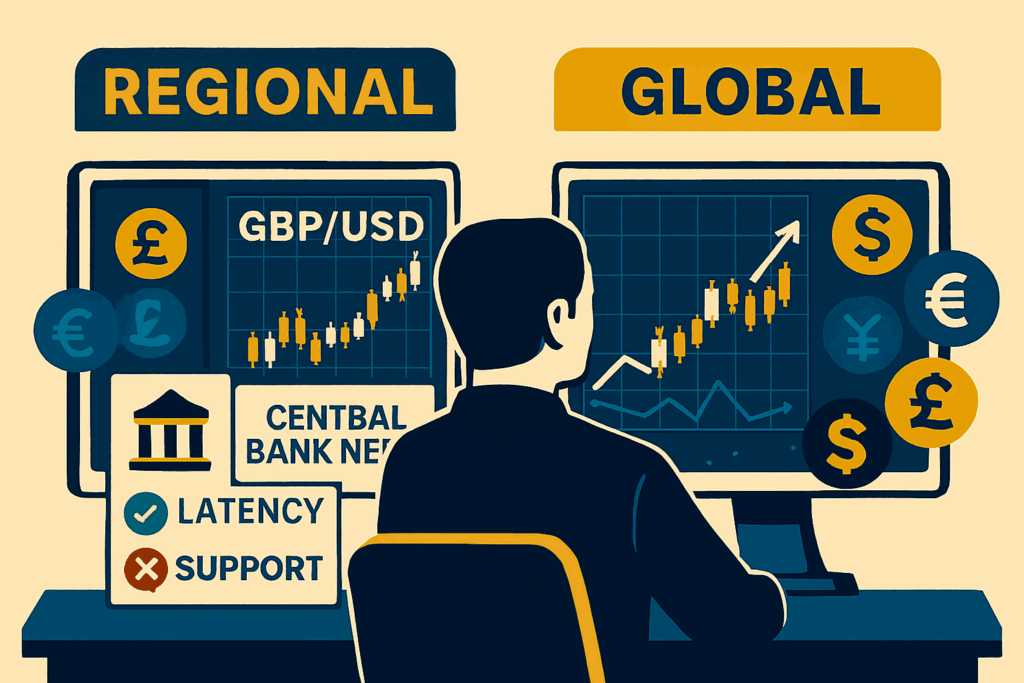
- Assess Your Trading Style – If you trade mainly local pairs and follow domestic economic developments, a regional provider may offer better insights. Global providers are better suited for traders who engage with multiple currency pairs and international markets.
- Check Historical Performance – Evaluate past accuracy, win rates, and drawdowns. A consistent track record is critical regardless of the provider’s focus.
- Consider Technology and Tools – Advanced charting, alerts, and algorithmic signals can improve trade efficiency and performance.
- Evaluate Support and Education – Good customer service, educational resources, and transparency enhance the overall value of any signal provider.
- Test Before Committing – Use demo accounts or trial periods to experience the provider’s signals firsthand. This allows you to compare performance, usability, and compatibility with your strategy.
Practical Example
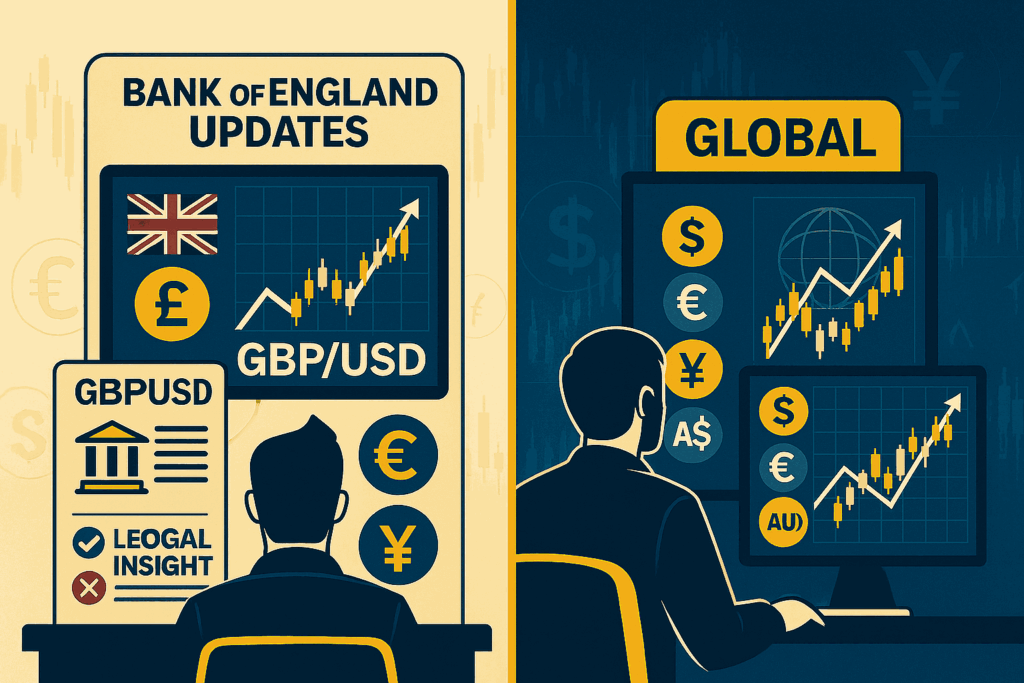
A trader primarily focused on GBP/USD may benefit from a regional provider that tracks BoE decisions, UK inflation, and domestic economic news. Conversely, a trader managing a diversified portfolio of USD, EUR, JPY, and AUD trades might prefer a global provider offering signals for multiple pairs and broader macroeconomic analysis. Testing both approaches can reveal which type aligns best with the trader’s goals and risk tolerance.
Conclusion
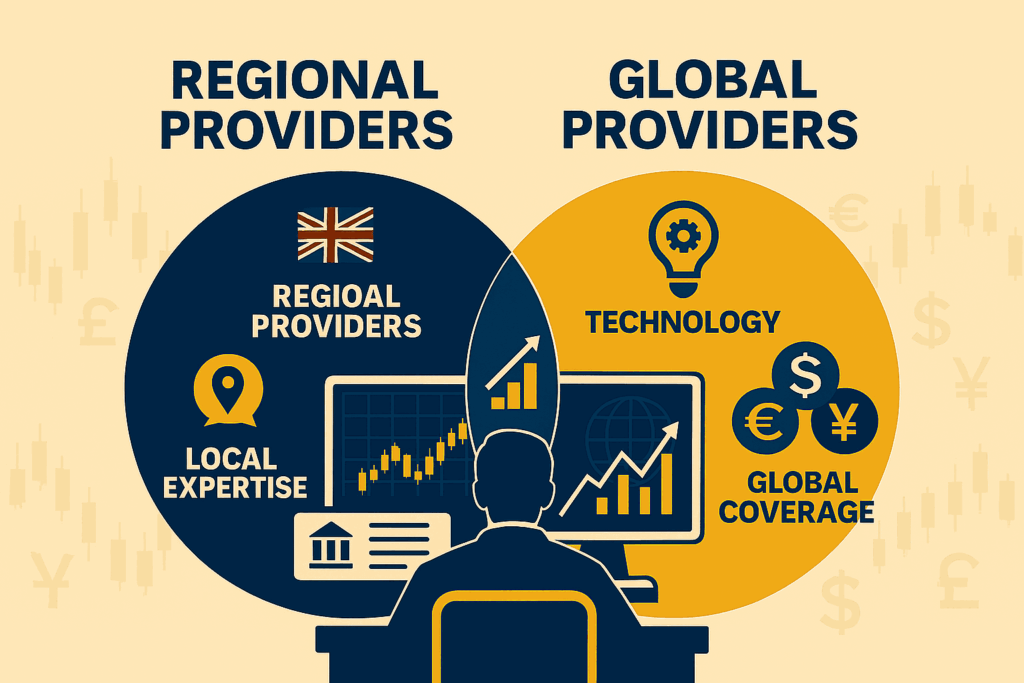
Both regional and global forex signal providers offer distinct advantages depending on a trader’s focus and strategy. Regional providers excel in local market expertise, tailored insights, and personalized support, while global providers offer advanced technology, diverse coverage, and standardized performance.
Traders should objectively evaluate historical accuracy, risk management, and compatibility with their trading style. By understanding the strengths and limitations of each type, traders can select the provider that offers the best chance for consistent profits and informed decision-making in the dynamic forex market.